
Business idea
An event merchandise concierge
A deadline-led service for useful attendee goods, clear packing plans and coordinated venue delivery.
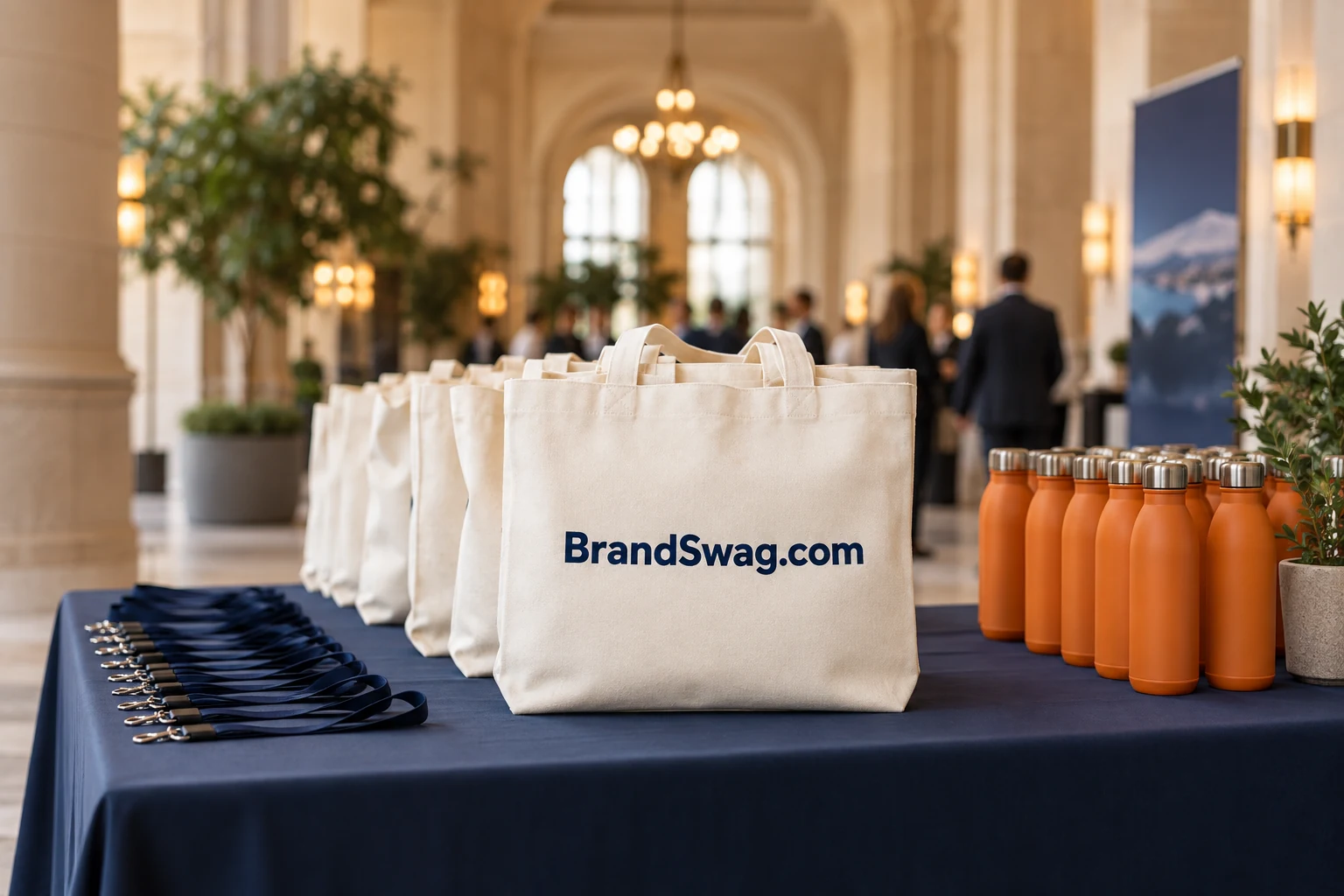
Event merchandise has an unforgiving deadline. A good bag that arrives after registration closes has missed its main purpose. An event merchandise concierge would focus on that reality: choosing useful items, coordinating decoration, preparing counted cartons and getting goods into the right hands at the venue. BrandSwag.com could give this specialist service a clear home across conferences, company gatherings and brand activations.
The concept here is illustrative. Its first buyer could be an event producer managing a small business conference, with a fixed date and several other suppliers to coordinate. That buyer needs decisions presented in a form that can be approved quickly. The service would combine a short selection of merchandise with a delivery plan and a named person responsible for each handoff.
Design around the attendee’s day
Start by mapping when an item will be used. A tote may help at registration, a notebook during sessions and a compact bottle throughout the day. An oversized gift could become a burden for someone traveling with hand luggage. The right choice depends on the event, the audience and the journey home. Ask the organizer how guests arrive and what they will already be carrying.
A pilot offer might contain a tote and notebook for attendees, with a separate small package for speakers. Keeping these groups distinct helps the organizer budget and helps the packing team count. Avoid adding an item simply to make the photograph look fuller. Every piece adds sourcing, decoration, packing volume and another opportunity for a late approval to affect the schedule.
Work backward from the room
The first deadline to confirm is the venue’s receiving window. An event date alone is insufficient. Find the permitted delivery location, recipient name, access rules and storage arrangements. Ask whether the organizer uses an advance warehouse or a designated service contractor. The person who books the room may not be the person who can authorize a freight delivery.
The Javits Center’s exhibitor resources, for example, distinguish delivery procedures, skilled labor and operational policies. They demonstrate why venue instructions are a separate planning task. Each event has its own current manual and arrangements. Confirm those details directly instead of assuming a courier can leave cartons at the main entrance.
Build a schedule with decision dates
Create a sequence for product selection, artwork submission, sample approval, production, inspection, packing and transport. Assign an owner to each approval. Include room for a failed sample or a corrected artwork file. The client should understand which date controls the order and what changes become impossible after that point. A timetable is most helpful when it shows decisions, not only a final delivery promise.
For an illustrative two-day conference with 180 attendees and twelve speakers, the concierge could prepare numbered attendee cartons plus a clearly separate speaker carton. The organizer might choose a modest reserve quantity after reviewing registration uncertainty. Those numbers are planning assumptions, not a recommended universal overage. The useful step is agreeing how many complete sets exist and where the reserve will be held.
Pack for the on-site team
A carton label should let someone identify its contents without opening every box. Use a consistent description, quantity and carton number. Provide a packing summary to the organizer and the receiving contact. If one carton contains mixed sizes or multiple item types, say so plainly. A box that is beautifully packed but difficult to count creates extra work during an already busy setup period.
Test the protective packing with the actual goods. FedEx’s packing guide provides a starting point for outer packaging, cushioning and sealing. The event team’s needs add another layer: cartons must also be manageable at the destination and easy to distribute. Transport protection and on-site convenience should both be considered before the final pack is approved.
Keep a small exception plan
Identify the few things most likely to disrupt the delivery: a late artwork signoff, missing stock, an incorrect venue label or a recipient who cannot be reached. Agree what the operator can change without further approval. That might be a neutral packing insert, but it should not include an unapproved substitute product. The client needs to know when a decision requires their attention.
Document what happens to unused merchandise after the event. Will it return to the client’s office, remain with the venue temporarily or travel to another gathering? Return labels, collection windows and storage fees can affect the closeout. Dealing with these questions before the event helps prevent a final scramble after everyone has gone home. A concise written handover is more useful than relying on a long message thread.
Find a repeatable buyer relationship
Independent event producers and small conference teams are plausible initial customers. A sample attendee pack, a packing summary and an example schedule can show the service more clearly than a large product catalog. Ask prospective buyers about the last delivery problem they had and who resolved it. That conversation reveals whether the opportunity lies in product selection, deadline management or coordination at the venue.
Start with a local event whose receiving arrangements can be checked in person or with a direct contact. After the pilot, review actual packing time, delivery exceptions and leftover quantities. Build the next offer around the work that made the organizer’s day easier. Someone interested in developing this concept can inquire about BrandSwag.com and outline the event audience, intended service region and operating plan.
Make BrandSwag.com your next move.
A clear starting point for a tangible business.