Business idea
A welcome-kit business for growing teams
A managed kit service that gives people teams one place to handle stock, packing and new-hire deliveries.
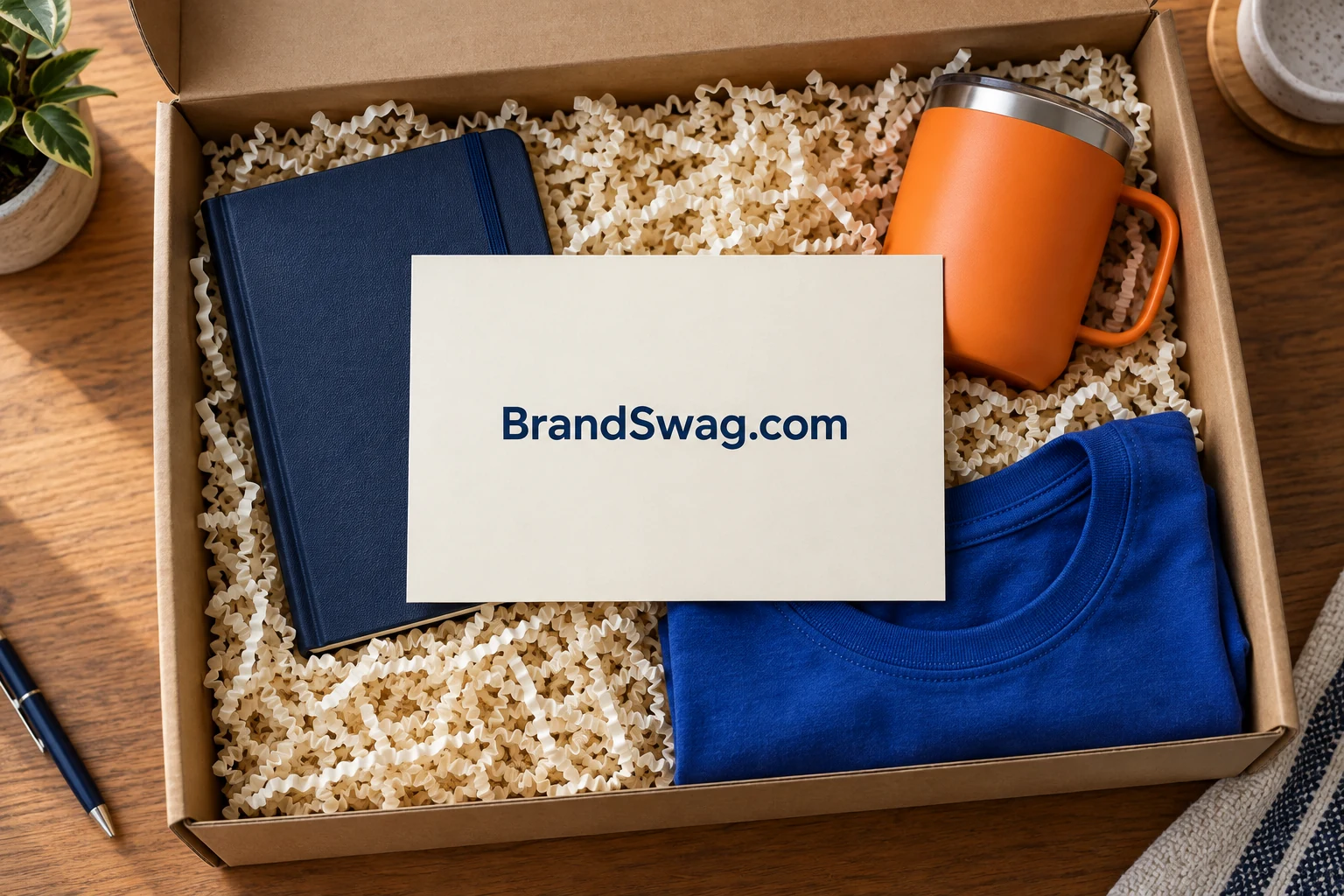
A new employee’s first package is a small project with a surprising number of owners. People operations supplies the start date. Marketing approves the logo. Someone asks for a different shirt size. A warehouse needs an address. A welcome-kit business could bring those tasks into one dependable service. BrandSwag.com would suit that practical, merchandise-led offer, with room to serve both office teams and employees working from home.
This is an illustrative business concept. The useful starting point is a specific customer: a growing company hiring throughout the year, with no dedicated merchandise manager. Its problem is repeated coordination. A box that looks good matters, but a box that reaches the right person before their first team meeting solves the more immediate job.
Start with one repeatable kit
The first offer could include a canvas bag, notebook, bottle and welcome card, packed together and sent on an agreed schedule. Keep apparel optional at first. Every size adds inventory decisions, and an incorrect size creates a replacement shipment. A small assortment makes it easier to inspect goods, explain choices and estimate replenishment needs. The buyer should see exactly what is included and which changes create a separate production run.
Build a physical sample before presenting the offer. Photograph the closed carton, the first view after opening and each item separately. Ask a people-operations buyer to unpack it without guidance. Notice which details need explanation. If the bottle moves around or the card disappears beneath packing material, change the construction before changing the sales pitch. The sample becomes a reference for both the client and whoever assembles future orders.
Sell the coordination around the box
A recurring service needs an agreed ordering rhythm. One possible pilot would take a weekly approved list of new starters, confirm addresses, reserve stock and report dispatches. Someone on the client side must own that list. Requests arriving after the cutoff need a clearly described treatment, such as the next scheduled batch or a separately quoted rush shipment. A friendly account relationship still needs these simple boundaries.
Consider an illustrative team hiring twelve people in a month. Four work at headquarters, six receive parcels at home and two are outside the initial service region. The operator could consolidate the office kits while handling home deliveries individually. The two unsupported destinations should be identified before taking the order. This example reveals the actual service design: address collection, packaging, dispatch decisions and exception handling, with merchandise at its center.
Make stock visible
Track stock by exact product variant, decoration version and condition. A navy bottle with an old logo is different from a navy bottle with the current logo. Separate finished kits from loose components so the buyer can understand what is ready to ship. A basic shared report can show available quantities, reserved units and the point at which a replenishment decision is needed. It does not require a custom application to be useful.
Agree who owns surplus goods and what happens when the client changes its identity. Storage, damaged items, replacement requests and end-of-contract stock should be discussed before a recurring arrangement begins. Otherwise a straightforward monthly service can become a cupboard full of ambiguous obligations. Start with a small inventory commitment until actual hiring patterns are clearer, then review the quantities against usage rather than a hopeful annual forecast.
Treat packing as part of the product
A presentation box and a shipping box may serve different purposes. Test the complete packed parcel, including protective materials, before promising a particular unboxing experience. FedEx’s packing guidance is a useful reference for selecting an outer carton, cushioning contents and sealing a shipment. Carrier guidance does not replace a test with the actual combination of goods.
Write a short packing sequence with a photo at each checkpoint. The person assembling the kit should know where the card goes, how much fill to use and how to identify the correct recipient. Keep home addresses accessible only to the people who need them. Explain how recipients can correct an address and how the client can remove an outdated record. Small operational habits become important when the order list grows.
Find the first buyers through a narrow offer
People-operations consultants, recruitment partners and workplace managers are plausible referral relationships. A sample kit and a one-page ordering example give them something concrete to share. The first outreach should ask about the current onboarding process: who orders, what goes wrong, how often requests arrive and who approves spending. Those answers are more useful than asking whether someone likes branded merchandise.
For decorated items, work from the supplier’s product-specific requirements. Printful’s graphics and embroidery guide illustrates why artwork preparation depends on the decoration process and product. Confirm the chosen supplier’s own specifications before approval. A logo file that works on a card may need adjustments for a stitched cap.
A focused first month
Interview a handful of prospective buyers, assemble one sample and document one complete dispatch. Review the time spent collecting information, packing and answering exceptions. The first useful measure is whether the service removes work for the buyer while remaining manageable for the operator. Add choices only when a real request justifies the extra handling. To explore acquiring BrandSwag.com for this concept, send a domain inquiry with the intended customer and service scope.
Make BrandSwag.com your next move.
A clear starting point for a tangible business.